
A Simple Homeowner’s Guide.
Learn how reverse osmosis water treatment works, what it removes and why it can benefit homes using municipal or borehole water.
Clean water starts with understanding what’s in it
When you fill a glass from the tap, the water usually looks clean. But many things dissolved in water can’t be seen, smelled or tasted.
Depending on where you live, your water may contain chlorine, salts, heavy metals, bacteria, pesticides, or naturally occurring minerals. Even if your water meets drinking water standards, many people still choose to improve its taste and quality at home.
One of the best ways to do this is with reverse osmosis, often called RO.
What is reverse osmosis?
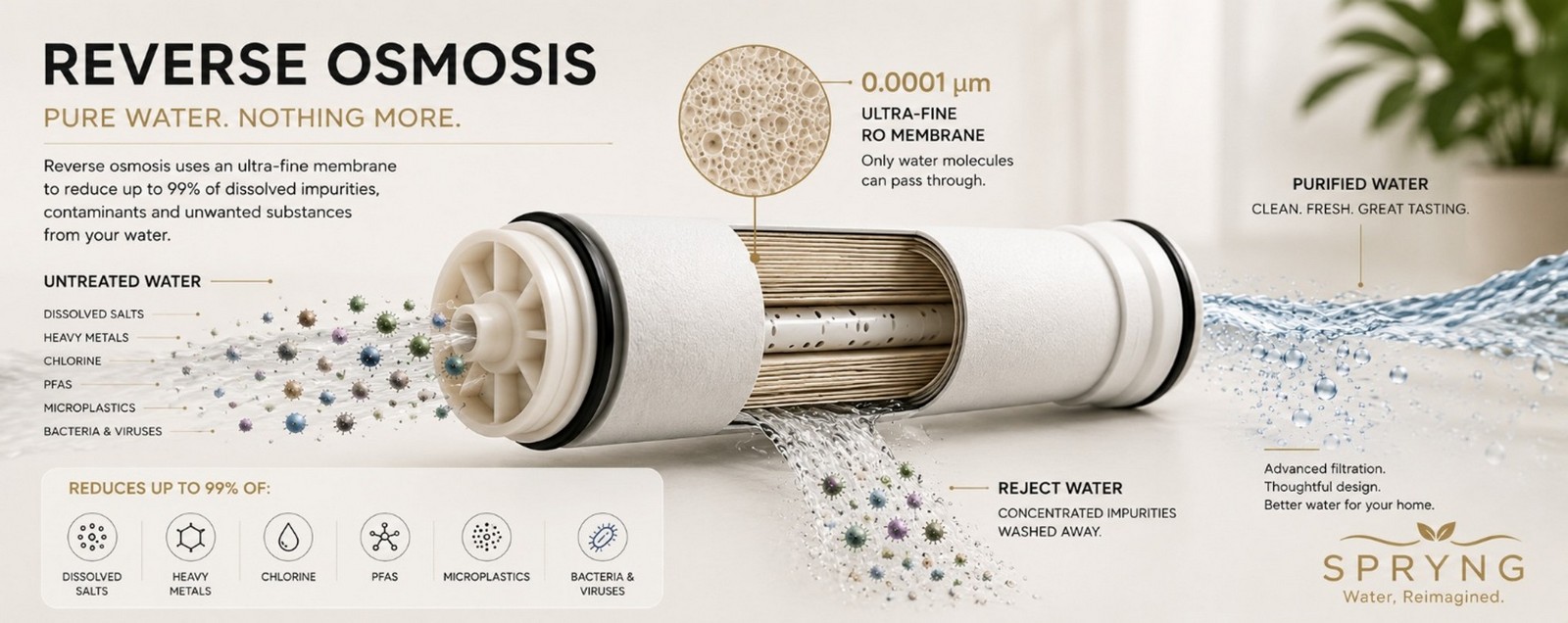
Reverse osmosis is an advanced water purification process that removes many of the unwanted substances found in drinking water.
Think of it like an incredibly fine sieve.
Water is pushed through a special membrane that is so fine only water molecules can pass through easily. Many dissolved salts, metals, chemicals and other impurities are left behind and washed away.
The result is fresh, clean, great-tasting water.
What does reverse osmosis remove?
A quality reverse osmosis system can reduce a wide range of contaminants, including:
- Chlorine
- Lead and other heavy metals
- Dissolved salts
- Fluoride
- Nitrates
- PFAS (“forever chemicals”)
- Microplastics
- Bacteria and viruses
- Unpleasant tastes and odours
Exactly what is removed depends on the quality of the system and the condition of its filters, but reverse osmosis is one of the most effective home water treatment technologies available today.
How does it work?
Most reverse osmosis systems don’t rely on just one filter.
Instead, water passes through several stages:
Step 1 – Sediment filter
Removes sand, dirt and rust.
Step 2 – Carbon filter
Reduces chlorine and improves taste and smell.
Step 3 – Reverse osmosis membrane
This is the heart of the system. It removes many dissolved impurities that ordinary filters cannot.
Step 4 – Final polishing
Some systems include a final carbon filter or add small amounts of beneficial minerals back into the purified water for a fresh, natural taste.
Why do people treat municipal water?
South African municipal water is treated before it reaches our homes. In most areas it is safe to drink and is monitored against national drinking water standards.
So why do many families still install a water purifier?
Because water travels a long way before it reaches your kitchen.
Along the way it passes through reservoirs, underground pipes, building plumbing and sometimes storage tanks. This can affect the taste, smell and quality of the water.
A reverse osmosis system treats the water at the point where you actually drink it, giving you an extra level of purification and consistently great-tasting water.
What about borehole water?
Borehole water is different.
Because it comes from underground, every borehole is unique. Some produce excellent water, while others contain high levels of dissolved minerals, iron, salts or bacteria.
The important thing to remember is this:
Clear water isn’t always clean water.
Many contaminants cannot be seen with your eyes.
If your home uses borehole water, the first step should always be a laboratory water test. The results will show exactly what is in your water and what treatment is needed.
In many cases, reverse osmosis forms an important part of the treatment system, together with other filters designed specifically for your water.
Does reverse osmosis remove healthy minerals?
Yes, reverse osmosis also reduces naturally occurring minerals such as calcium and magnesium.
Many modern systems, including our SPRYNG models, include a remineralisation stage that adds carefully selected minerals back into the purified water. This helps produce water that tastes fresh and balanced.
Is reverse osmosis better than bottled water?
Many people buy bottled water because they prefer the taste.
A reverse osmosis system gives you that same convenience at home.
Instead of carrying heavy bottles, storing them or constantly buying more, you can enjoy purified drinking water whenever you need it.
It also helps reduce plastic waste and the ongoing cost of bottled water.
Is reverse osmosis right for my home?
For most families, reverse osmosis is an excellent choice for drinking and cooking water.
If you use municipal water, it provides an extra level of purification and consistently fresh-tasting water.
If you use borehole water, reverse osmosis is often one part of a complete treatment solution designed around your water test results.
The best system is not the one with the most filters—it’s the one that’s right for your water.
The SPRYNG difference
At SPRYNG, we believe choosing a water purifier shouldn’t be confusing.
That’s why we’ve designed our systems to combine advanced reverse osmosis technology with modern design, simple maintenance and exceptional drinking water.
Whether your home uses municipal or borehole water, we’re here to help you find the right solution.
Because better water begins with understanding what’s in it.