
Understanding the chemicals making headlines and what they mean for your family’s drinking water.
Learn what PFAS “forever chemicals” are, where they come from, why they’re making headlines and how reverse osmosis can help reduce them in drinking water.
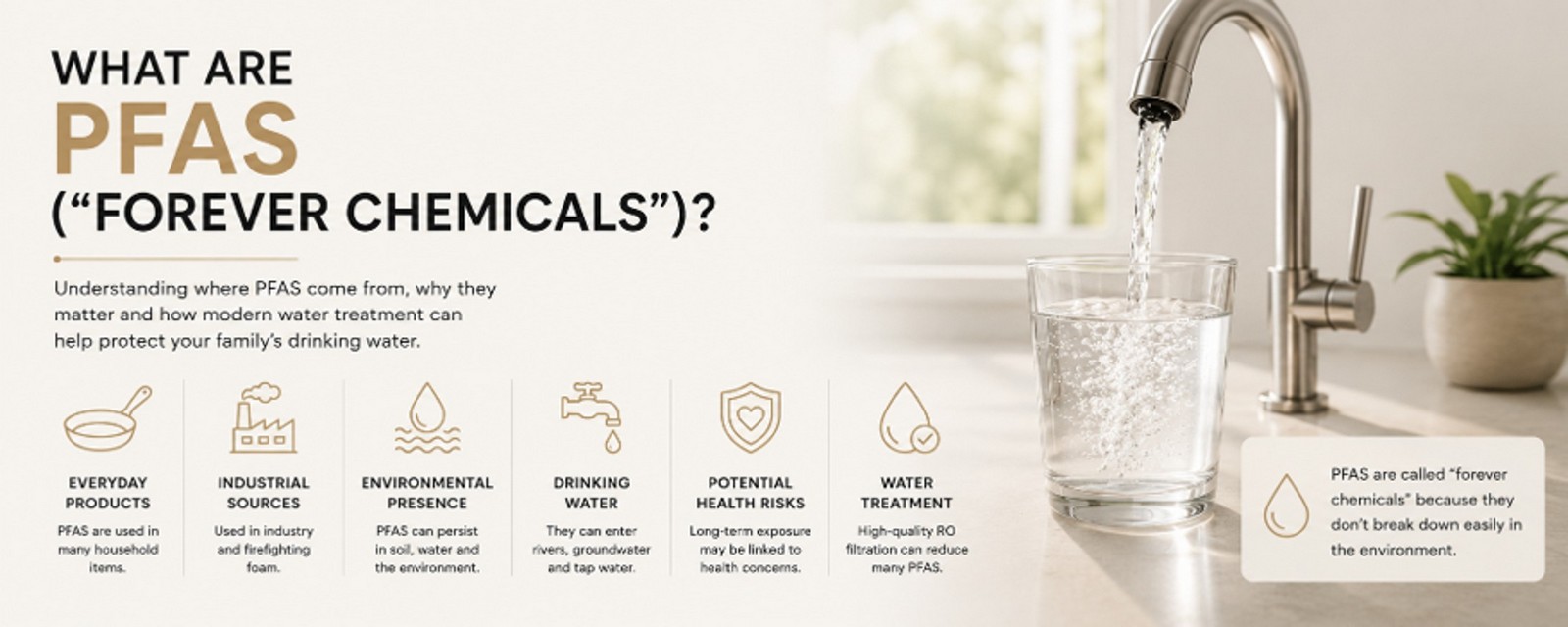
If you’ve read the news recently, you’ve probably come across the term “PFAS” or “forever chemicals.”
They’re being discussed by scientists, governments and health organisations around the world, but many people still aren’t sure what they actually are—or whether you should be concerned.
The good news is that understanding PFAS doesn’t have to be complicated.
Let’s take a closer look.
What are PFAS?
PFAS (pronounced “pee-fass”) stands for per- and polyfluoroalkyl substances.
That’s a mouthful, so most people simply call them PFAS or forever chemicals.
PFAS are a large family of man-made chemicals that have been used since the 1940s because they resist heat, grease, oil and water.
They’ve helped make many everyday products more durable and convenient.
Where are PFAS found?
You may be surprised by how common they are.
PFAS have been used in products such as:
- Non-stick cookware
- Water-resistant clothing
- Food packaging
- Stain-resistant carpets and furniture
- Some cosmetics
- Firefighting foams used at airports and industrial sites
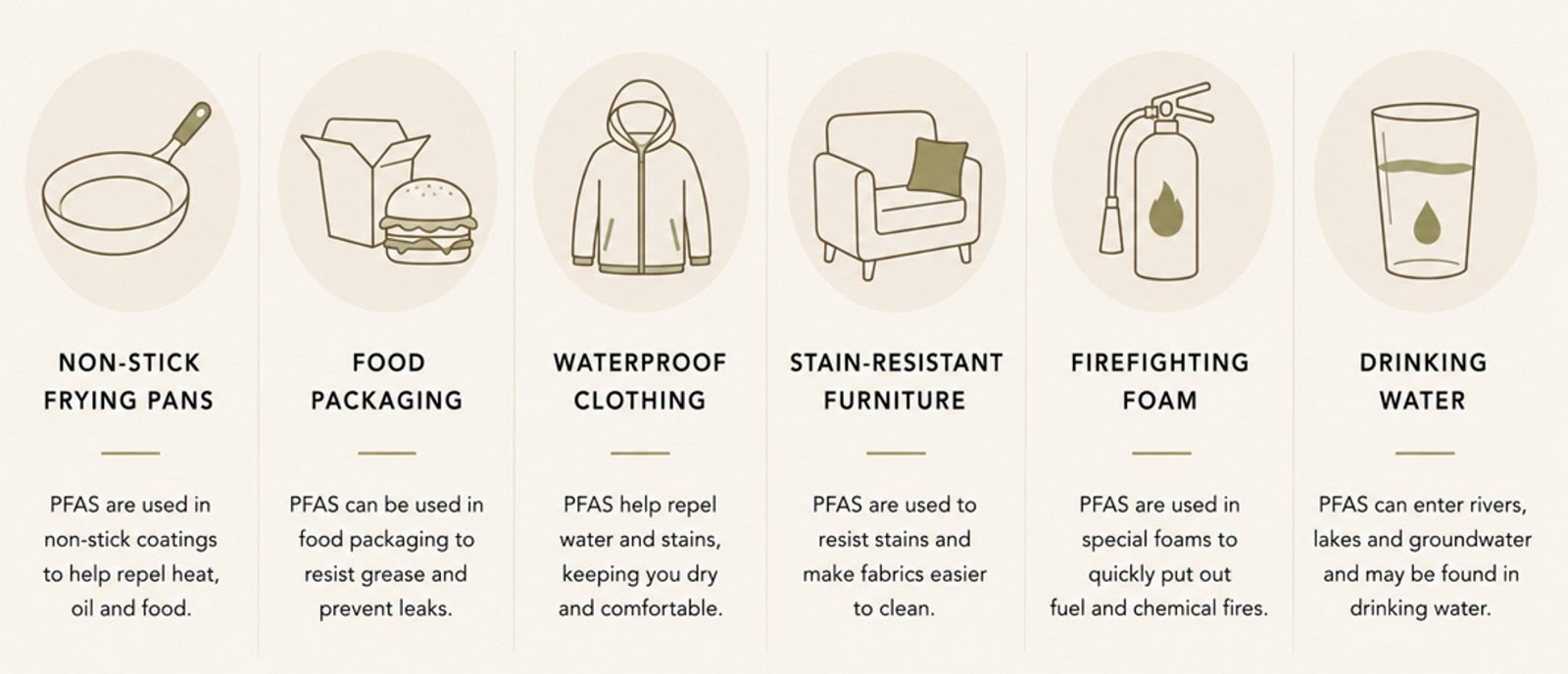
Because these chemicals have been used for decades, small amounts have found their way into the environment.
Why are they called “forever chemicals”?
Most chemicals naturally break down over time.
PFAS are different.
They are extremely stable and can remain in the environment for many years without breaking down easily.
That’s why they’re often called forever chemicals.
They can be found in soil, rivers, groundwater and, in some parts of the world, drinking water supplies.
Should families be worried?
Research into PFAS is still ongoing, and scientists continue to learn more every year.
What we do know is that long-term exposure to certain PFAS at elevated levels may not be desirable, which is why many countries are introducing stricter drinking water guidelines and reducing their use in manufacturing.
The important point is that the concern is generally about repeated exposure over many years, not drinking a single glass of water.
Health authorities around the world are taking PFAS seriously, and monitoring continues to improve as more is learned.
Are PFAS found in South Africa?
PFAS have been detected in many countries around the world.
In South Africa, research is still developing and routine monitoring is not yet as widespread as it is in some parts of Europe, Australia or the United States.
This means we know far less about where PFAS may be present locally.
Because these chemicals are used globally, experts believe continued research and monitoring will become increasingly important.
Can home water treatment help?
Not all water filters are designed to reduce PFAS.
Simple jug filters or basic sediment filters may improve taste, but they are not necessarily effective at reducing these chemicals.
High-quality reverse osmosis (RO) systems have been shown to significantly reduce many types of PFAS, making them one of the most effective point-of-use water treatment technologies available for the home.
Many systems also include activated carbon filtration, which can further improve water quality by reducing chlorine, unpleasant tastes and odours.
Why are more families choosing home water purification?
Even when municipal water meets drinking water standards, many homeowners choose to install a water purification system for added peace of mind.
Some of the reasons include:
- Improving taste and smell.
- Reducing chlorine.
- Reducing many dissolved contaminants.
- Producing consistently fresh drinking water.
- Having greater confidence in the water used for drinking, cooking and making baby formula.
For many families, it’s simply about knowing that the water they drink every day has received another level of purification before it reaches the glass.
The bottom line
PFAS have become one of the most talked-about water quality issues in the world—and for good reason.
Although scientists are still learning about their long-term effects, these chemicals are receiving increased attention because they remain in the environment for a very long time.
The good news is that modern water treatment technologies, including high-quality reverse osmosis systems, can significantly reduce many PFAS compounds and help provide cleaner, better-tasting drinking water at home.
At SPRYNG, we believe the best decisions start with understanding your water. That’s why our systems combine advanced purification with thoughtful design—helping South African families enjoy fresh, great-tasting drinking water every day.